$3,200/seat/yr
Parking displaced
Free up parking spots
Seattle/Bellevue parking runs $250–$350/month. Shuttling 50 employees displaces $160K+ in annual parking lease costs.
Turn-key commuter programs from Snohomish County to Seattle, Bellevue, and Redmond employers. Per-seat, route-based, or full-charter pricing, with the booking app, driver, vehicle, route optimization, and ESG reporting all handled — so your people team can focus on people.
A real benefit employees use. Improves recruiting, retention, and engagement scores.
For FacilitiesCut $200K+ in annual parking costs. Free up spaces for clients, visitors, growth.
For ESGScope 3 emissions reduction with monthly reporting aligned to CDP and TCFD.
Commuter programs aren't a feel-good benefit — they're a measurable line item. Here's what our employer clients consistently see in their first 12 months.
Seattle/Bellevue parking runs $250–$350/month. Shuttling 50 employees displaces $160K+ in annual parking lease costs.
Employees with commuter shuttle access show 18% higher 2-year retention vs. non-shuttle peers. Replacing a $120K hire costs $40K+ on average.
Riders gain back ~47 minutes per day of focused work, email, or rest — vs. driving solo. Most use the morning ride to clear their inbox.
Average satisfaction across active programs. Frequently cited as a top-3 benefit in employee engagement surveys — alongside salary and health.
Methodology: Figures based on 12-month average across 42 active programs (2024–2025). Parking displaced reflects market-rate Seattle SLU and Bellevue downtown. Retention lift based on internal client surveys, n=8 employers reporting tenure data. Productive time self-reported by riders in monthly surveys.
Most employer commute challenges fall into one of these four shapes. Programs combine and adapt across them — and we re-evaluate ridership patterns quarterly.
Daily routes from Snohomish County neighborhoods to a single corporate campus in Seattle, Bellevue, or Redmond. Most-common pattern.
Inter-campus routes between Seattle, Bellevue, and Redmond offices throughout the day. Bridges hybrid teams across locations.
Routes calibrated to your 2- or 3-day in-office mandate. Higher capacity on Tuesday/Wednesday/Thursday, scaled down or paused on Monday/Friday.
Late-shift, early-shift, and weekend routes for hospital, manufacturing, and 24/7 operations employers. Off-peak hours where transit doesn't run.
Programs are priced by how you want to allocate cost: per-seat (rider-billed or subsidized), route-based (one route, all-you-can-board), or full charter (you own the vehicle slot). Final pricing is custom to your headcount and route.
Pay only for seats used. Best for variable demand or hybrid teams.
Dedicated daily routes. Best for predictable commuter populations of 20+.
Multiple routes, multi-vehicle. Best for 150+ riders or multi-site programs.
★ All programs include 6-month initial term, then roll month-to-month. Pre-tax commuter benefit setup, ridership reporting, and ESG/carbon dashboards included at every tier. Volume discounts available for headcount 100+.
Implementation is a stepped process, but it's a fast one. Most programs go from contract signed to first route operating in 30 days. Here's exactly how those 30 days break down.
Discovery call with your HR / Facilities lead. We survey your workforce (anonymously or via your tools) to confirm interest, identify density clusters, and optimize stop placement. Survey takes 2–3 minutes per employee.
Master service agreement signed. We integrate with your benefits provider (Edenred, Wage Works, etc.) to enable pre-tax commuter dollar usage. Your account manager is assigned and joins your internal Slack or Teams channel.
We build your branded rider portal (or white-labeled app for Full Charter), seed it with route info, and send launch comms to your eligible employees. Riders enroll, set their pickup preferences, and book their first week.
First week of routes operates as a pilot. We watch ridership patterns, run on-vehicle satisfaction surveys, and refine pickup timing if needed. By end of pilot, the route is stable and we move to steady-state operations.
Monthly ridership and ESG reports delivered to your sponsor. Quarterly route review with your account manager — we check ridership trends, sustainability metrics, and proactively suggest route changes if patterns shift.
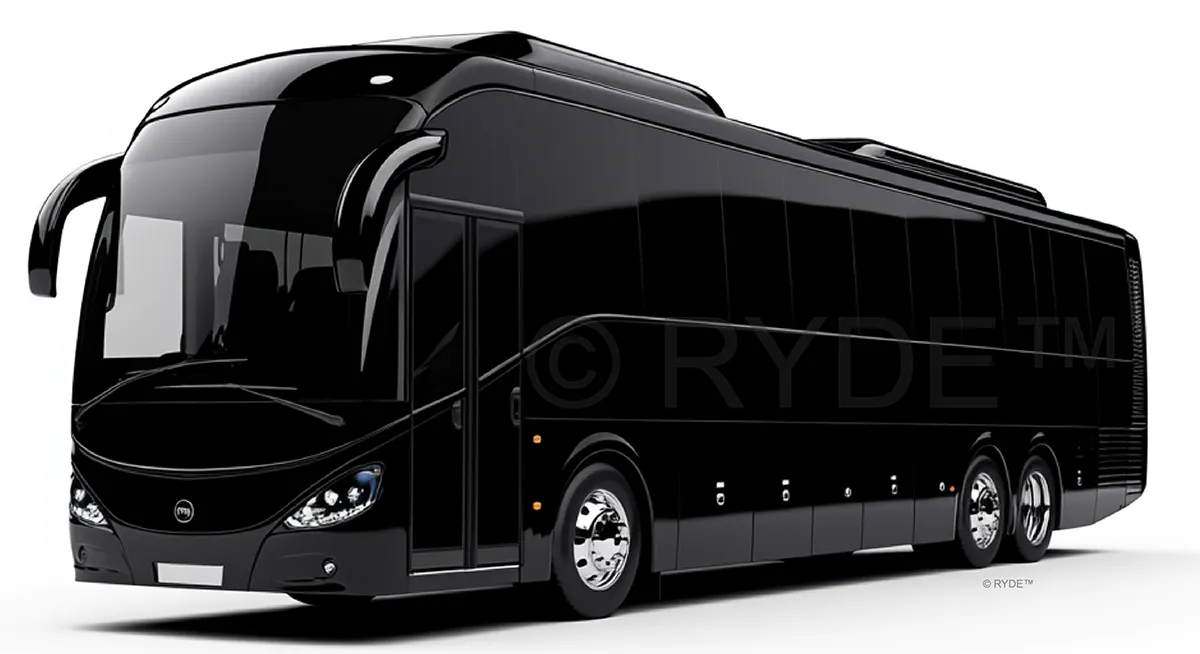
Commuter vehicles are matched to your route's projected ridership. All are equipped with Wi-Fi, USB charging at every seat, and climate control — so the commute is productive, not lost time.
The go-to commuter vehicle. Captain's chairs, generous legroom, and overhead storage. Best for new or smaller routes where ridership is still ramping.
The commuter sweet spot. Coach-style seats with table-back work surfaces. Sized for established routes with 15+ predictable daily riders.
For high-density routes serving 30+ daily riders. Highway-grade suspension, recline seating, large luggage bay. The closest thing to working on a private train.
From aerospace and biotech to retail and healthcare — we run commuter routes for some of the region's largest employers and a growing list of mid-size companies. (Logos shown are illustrative placeholders pending client approval.)
When their Everett campus expansion required parking they didn't have, Cascade launched two Snohomish-County routes serving Lynnwood and Marysville. 18 months in, they've eliminated their parking lease overflow and shifted those costs into the program.
Pre-IPO biotech needed audited carbon reduction for their S-1. Launched a single route from Mukilteo to Bothell campus, displaced ~480K vehicle miles in year one, and unlocked the Scope 3 disclosure they needed for the prospectus.
Every commuter shuttle ride displaces a solo car commute. We measure the carbon impact at the trip level and deliver reports formatted for ESG disclosure — CDP-aligned, TCFD-aligned, and ready for your annual sustainability statement.
Total vehicle miles traveled removed from solo commutes across all active programs in the last 12 months.
Calculated using EPA emissions factors for average light-duty vehicle (411 gCO₂e/mile) minus shuttle emissions per pax-mile.
Average emissions reduction per rider switching from solo commute to shuttle, accounting for first/last-mile.
Across 42 active programs since 2019, with retention curves matching or exceeding national vanpool benchmarks.
Each program receives a monthly ESG report delivered to your sustainability lead. Aligned with the major disclosure frameworks so it integrates directly with your annual report.
Six common questions from HR, Facilities, and ESG buyers evaluating commuter programs. For broader questions, see the full FAQ page.
Most programs go from contract signed to first route operating in 30 days. Larger programs (3+ routes or 60+ riders) typically take 45–60 days due to ridership surveys, route optimization, and vehicle procurement. We can run an accelerated 21-day launch for urgent cases.
Programs require a 6-month initial term. After that, contracts roll month-to-month with 30-day notice. The 6-month minimum gives us time to recover route-development costs and gives the program a fair shot at building ridership — most programs hit their stride around month 3.
Full rider experience. Branded mobile app or web portal for booking and route updates, real-time arrival tracking, SMS alerts, dedicated rider support line, and monthly satisfaction surveys reported back to the employer. For Full Charter clients, the entire experience is white-labeled with your branding.
Yes. Programs are structured to be eligible for IRS Section 132(f) pre-tax commuter benefits (up to $315/month in 2026). Most employers cover 50–100% of seat cost as a benefit; we work with your benefits provider (Edenred, Wage Works, etc.) on enrollment so riders pay pre-tax.
Routes are re-evaluated quarterly. If a route consistently runs below 50% capacity for two quarters, we'll either consolidate it with another route, downshift to a smaller vehicle, or sunset it with 60-day notice. No "pay for empty seats" penalty — you're never charged for capacity that didn't materialize.
Monthly ESG report covering: vehicle miles traveled (VMT) displaced from single-occupancy commutes, CO₂e tonnes avoided (EPA-methodology calculation), and trip-level ridership data. Reports are CDP and TCFD aligned for ESG disclosure and Scope 3 reporting. Annual third-party verification available for an additional fee.
Send us your headcount and rough geography for a custom quote within one business day. Or book a 30-minute discovery call directly with our commuter program lead — we'll scope the program live and follow up with a written proposal.